
Overview of Thread Lift in Nepal
Thread lift in Nepal is emerging to become one of the most popular solutions among individuals who wish to renew their appearance without undergoing conventional surgeries. It is a very safe and minimally invasive operation that aims to tighten the loose skin. It restores natural features to the face. The technique uses ultra-thin and dissolvable threads to give an immediate lift, combined with boosted collagen production. It helps to sustain long-term results in firmness and skin texture. The process is increasingly gaining popularity as it has a minimal period of healing as opposed to surgical facelifts. It produces natural results. This procedure is perfect for those people who would like to rejuvenate with an effective yet safe procedure.
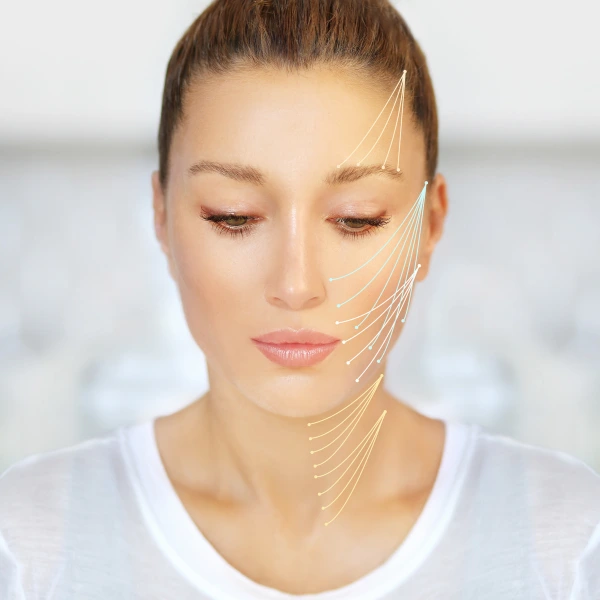
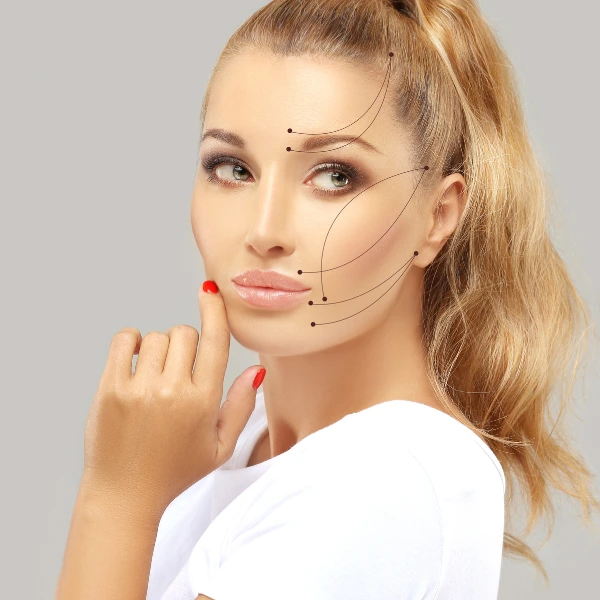
What is a Thread Lift?

Benefits of a Thread Lift
The main advantage of a thread lift in Nepal is that it does not require major surgery. It does not require maximum time to recover and has minimal downtime. Most of the patients say they returned to daily activities within a few days. This process provides a natural lift that avoids the overly tight appearance. Some surgical facelifts may result in a drastic lift visible on the face, but this thread lift procedure makes it as natural as possible. Patients also say that the pain is mild and that they feel discomfort during the procedure, but it will be temporary. Additionally, thread lifts in Kathmandu are performed with modern techniques and by experienced specialists. Globally, the demand for thread lifts is rising. The market research states that the PDO thread lift industry will nearly double in value by 2032, showing increasing trust in this procedure.
How Does It Work?
During a thread lift in Nepal, the operation typically starts with local anesthesia to minimize pain. The physician then inserts thin chains of threads below the skin with the assistance of a small needle or cannula. These threads are strategically placed so as to pull down the cheeks, jaw, or eyebrows. The results are visible immediately because of the mechanical lifting effect. Over the following weeks, collagen builds around the threads. It improves firmness and texture even more. The threads themselves dissolve naturally within months, but the new collagen continues to maintain the results for up to 1-2 years.
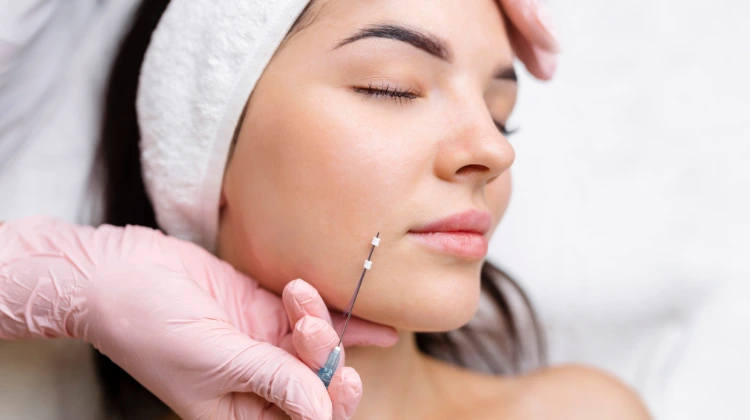
Our Thread Lift Techniques
Aftercare and Maintenance
- Do not engage in exhausting physical activity for a few days after treatment.
- Avoid rubbing or pressing the treated area.
- You should wait at least a week before exposure to hot environments like saunas.
- Gentle facial movements after initial healing may help collagen form.
- Keep your skin sunproofed and well hydrated to extend results.
Following these directions can speed recovery and extend lift duration. Practicing care boosts collagen health and improves long-term results.
Watch: From the Best Skin Doctor in Kathmandu
Cost of Thread Lift in Nepal
The prices of thread lifts in Nepal may differ according to the clinic. It depends on the form of threads and the number of threads needed. Prices vary depending on the priorities of individuals. At Aesthetic Aura, we believe to have transparency in pricing and offer personalized consultations. That’s why we offer individual consultations to evaluate your skin and provide a customized treatment plan that aligns with your goal and budget.
Achieve lifted, and younger looking skin with the best thread lift treatment in Nepal.
Aesthetic Aura will satisfy your skincare needs with the top thread lift treatment in Kathmandu.
Frequently Asked Questions
It is a nonsurgical treatment where dissolvable threads are inserted under the skin to lift sagging areas. It helps to stimulate collagen.
It typically lasts for 1-2 years. Although it depends on the skin type, age and lifestyle activities.
Local anesthesia will be used to start the procedure. It will minimize the discomfort.
Temporary swelling, bruising, and redness may occur. These usually resolve within days when performed by trained professionals.
The number of threads depends on the treatment area and goals. A professional consultation gives the best estimate.