

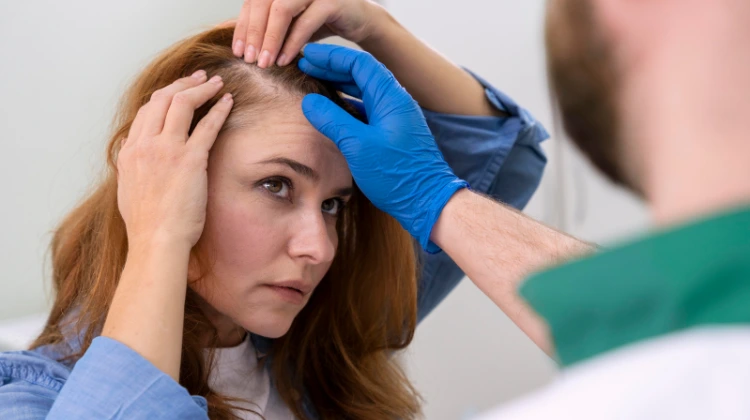
Hair transplants can be done for men as well as women to restore hair density and increase confidence. The concept of female hair transplant is gaining popularity today due to the fact that they are minimally invasive and do not take a long time to heal. For those who have thinning hair or a bald scalp and are considering a hair transplant for women, we have provided detailed information, the pros and cons of each technique, the time to see results, and suitability for each individual in this blog.
Understanding Hair Loss in Women
What causes hair loss? The problem of female baldness, severe thinning hair, and hair loss leading to the consideration of female hair transplant has many causes, such as hormones, genetics, age, stress, underlying diseases, or even some medical treatments.
i. Hormones and Genetics
More than half of women experience thinning of hair and baldness due to genetic sensitivity to androgens; most of them are genetically influenced. The loss or thinning of hair is normally observed at the middle and sides of the head.
ii. Age
As one grows older, estrogen levels reduce, resulting in a higher level of hair thinning than before.
iii. Hormonal Changes
Postpartum women, pregnant women, and women under extreme physical or emotional stress or menopause may develop an increased incidence of shedding hair about 2-3 months after the onset of such conditions.
iv. Certain Diseases
Hair loss takes place when some diseases develop based on the hormonal imbalance, e.g., autoimmune diseases, thyroid disorders, etc.
v. Some Drugs
Certain medications, like acne and high blood pressure medications or arthritis, may cause loss and thinning of hair, which results in baldness among females.
Others would be the frequency of hair coloring, tight hairstyles, and wigs. They may cause loss of hair, thinning, and baldness in a person if untreated.
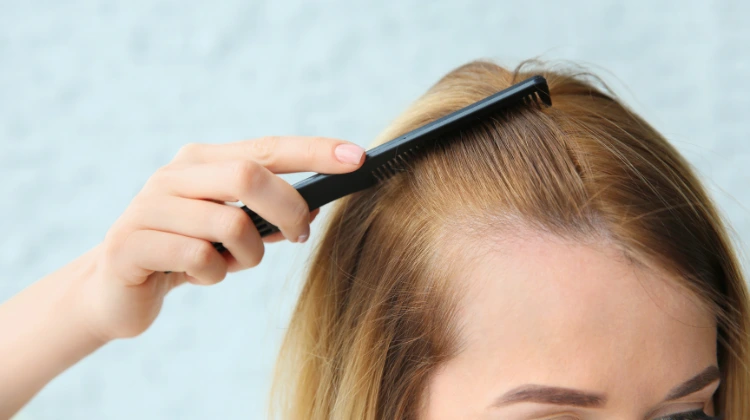
What Is a Hair Transplant for Women?
Hair transplant for females is a medical procedure used specifically to correct the issue of thinning hair or hair loss among women. It is a procedure of moving hair follicles of a region of thick hair growth (donor area) to a region of thin hair growth or baldness (recipient area).
The key principle is using the patient’s own hair, resulting in natural and safe outcomes. Female hair transplant can help solve problems such as hair loss, thinning hair in certain areas, partial hair loss, receding hairlines, and bald scalps caused by various factors.
Types of Hair Transplant Techniques
Hair transplant for women has two major methods of treatment today. They are:
1. Follicular Unit Transplantation (FUT)
The FUT or strip technique is a process in which the hair specialist doctor makes a strip of scalp that is rich in quantity of hair, which is primarily found in the back of the head.
Advantages of FUT
- Can harvest a large number of hair follicle cells in a single surgery
- Suitable for those needing hair transplantation over a wide area
- Allows harvesting of a large number of grafts in a single session
- Saves surgery time compared to FUE
Disadvantages of FUT
- Leaves a straight cut on the back of the head, which can be visible in case the hair is kept short
- Longer recovery time and possibly more pain
2. Follicular Unit Extraction (FUE)
The FUE is a novel technological process whereby the surgeon removes hair follicles, one or one to four hairs at a time. It is done via special instruments on thicker parts of the hair and transplants them to the region of need without the use of a strip of scalp, as in FUT. This leads to a reduction of pain and a faster recovery.
Advantages of FUE
- No long linear scars, only tiny dots that are invisible to the naked eye
- Shorter recovery time and less pain for patients
- Suitable for those who want to keep short hairstyles
- Can return to daily life faster
- Results can start to be seen in about 6 months, with full results around 1 year
Disadvantages of FUE
- Longer surgery time, especially if a large number of grafts are needed
- May require shaving the donor area
- May harvest fewer hair follicles in a single surgery
Also, there are new technologies of hair transplant for women, like the Direct Hair Implantation (DHI), where hair is implanted directly with specific tools to make it more accurate and spend less time in surgery.
Cost of Hair Transplant in Nepal
In Nepal, hair transplants cost NRP 50,000 to NRP 400,000. It is, however, dependent on the graft volume to be used in the process. A graft consists of a few hair follicles that have been taken out of the donor region. On the one hand, a hair transplant might appear very expensive; however, it is affordable in the long term.
The price of a hair transplant for women in Nepal can be divided according to the location of the transplant.
- Smaller Area: NRP 50,000 to NRP 80,000
- Medium coverage: NRP 100,000 to NRP 200,000
- Large area of coverage: NRP 200,000 to NRP 400,000
Results and Recovery Timeline
The following is the schedule of the healing process of a hair transplant among women:
Day 1-3: Early Post-Procedure
- Minimal forehead and head swelling.
- There are small scabs that develop on the follicles of hair
- Light pain or stiffness (treated with drugs)
- Lay down to sleep with your head raised high.
- No touching, scratching, or vigorous washing
Day 4–7: Early Healing Phase
- Scabs begin to dry and fall off
- Itching may start
- Swelling reduces significantly
- Gentle hair washing is usually allowed as per the doctor’s advice
- Most people return to normal work after 3–5 days
Week 2–4: Shedding Phase (Shock Loss)
- Transplanted hairs start falling out
- This is normal and temporary
- The roots remain safely implanted under the scalp
- Many people worry at this stage, but this is expected
Month 2–3: Resting Phase
- Hair follicles remain dormant
- Little visible growth
- The scalp looks similar to the pre-transplant stage
- Patience is very important here
Month 3–4: Early Growth Begins
- Thin, soft baby hairs start growing
- Hair may look uneven initially
Month 5–6: Noticeable Improvement
- Hair becomes thicker
- Coverage improves
- Around 40–60% visible growth
- You will start seeing real changes
Month 8–9: Major Growth Phase
- Significant density improvement
- Hair texture improves
- Styling becomes easier
- Around 70–80% of the results are visible
Month 12: Final Results
- Full thickness achieved
- Natural-looking hairline
- Final density visible
- Some may continue improving up to 15–18 months, especially for the crown area
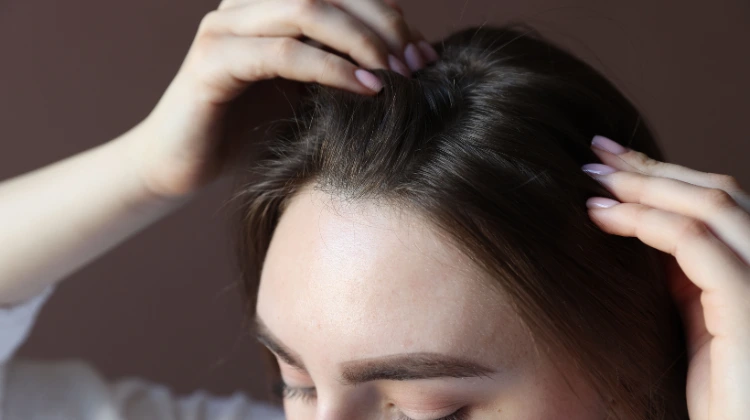
Benefits of Hair Transplant for Females
Below are some of the advantages of hair transplant for women:
i. Permanent Solution:
A hair transplant is a long-term solution as opposed to the temporary ones. The grafted hair resembles the actual hair in that it grows and sheds just like the actual hair.
ii. Natural-Looking Results:
Expert hair transplant surgeons can reproduce a natural hairline, revitalize the hair density, and come up with a look that resembles the one that was present on the patient.
iii. Increased Confidence:
Hair loss can have severe effects on the self-esteem and confidence of a female. Hair transplants are done by women to restore lost confidence, and their quality of life is enhanced also.
iv. Low Maintenance:
Transplanted hair does not need extra care or maintenance. It can be washed, braided, and cut like natural hair.
Conclusion
The loss of hair among women is emotionally difficult, and nowadays, one can recover not only the hair but the confidence as well. Women in Nepal can use hair transplant as a safe, productive, and long-term approach to the issue of thinning or baldness of hair. Consulting, achieving expectations, and selecting an acceptable skin and hair clinic like Aesthetic Aura are important in obtaining the best outcome. To have healthy and full coverage hair, one needs to research, see a specialist, and make a wise choice.
FAQs
- Is a hair transplant painful?
A hair transplant is mainly uncomfortable. Anesthesia is, however, done on the patients in order to make the treatment smooth.
- Does the hair of the donor grow back?
No, the follicles of hair extracted fail to grow back.
- What are 1,000 hair grafts?
The 1000 hair grafts are grafts of 1000 follicular units in one section of the body to another, which in this case usually is on a bald or thinning section of the body.
- What is the most appropriate hair transplant for women?
The best technique in hair transplantation is Follicular Unit Extraction, which makes a natural appearance with minimum side effects and is also dependent on the individual patient.
