


Nobody enjoys reapplying lipstick every couple of hours. That’s usually the actual reason lip tinting comes up so often in consultations here. Before anything else, though, there’s a mix-up worth sorting out first, because it trips people up in almost every search on this topic. Type “lip tinting” into Google, and you’ll get two different things thrown together: a makeup product you’d buy off a shelf and a semi-permanent pigmentation procedure done by a trained specialist. This article is only about the second one. What lip blushing and lip tinting in Nepal actually involve, how the two terms get used, what happens during treatment, and what healing looks like once you’re out the door.
Background: Why This Treatment Has Reached Kathmandu
Semi-permanent makeup, PMU or SPMU, depending on who you ask, isn’t a new idea. Clinics abroad have offered it for years, and it’s followed roughly the path microblading did here a bit earlier. Part of why it caught on locally comes down to something pretty ordinary: a packed schedule doesn’t leave much room for a full makeup routine before work, before a wedding function, or on a normal day running errands across town. For many people in Kathmandu, the appeal is simple. Color that survives the day without a touch-up kit.
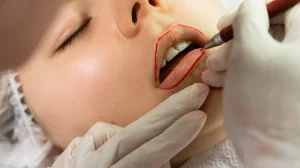
The lip tint procedure involves cosmetic tattooing, which means pigment goes into the skin of the lips, not on top of it. That’s the whole reason it belongs in a clinic and not a beauty studio.
What Is Lip Tinting?
Lip tinting in Nepal, in general use, means pigment placed close to the surface of the lips, giving a soft, natural color that outlasts lipstick or gloss by a wide margin. It falls under the broader umbrella of cosmetic tattooing, alongside terms like PMU and SPMU. Different providers use these labels a little differently, but the underlying idea holds: pigment placed to last far longer than anything you’d apply topically.
Many people use “lip tinting” and “lip blushing” fairly inconsistently across the industry, and the terminology isn’t standardized. Sometimes they’re used interchangeably. In practice, the two are more reliably told apart by intended result and technique than by an exact, universal depth measurement, and your specialist can walk you through exactly how they use each term during consultation.
What Is Lip Blushing?
Lip blushing is usually described as pigment placed a bit deeper than surface tinting, giving a softer flush rather than a flat block of color. Think of the tint lips take on naturally in cold weather rather than a full “lipstick” look. Anyone who’s had eyebrow microblading done will recognize the technique in spirit: color built up gradually, in thin layers, instead of applied all at once. That layering is a big part of why the healed result tends to look soft instead of obviously done.
Lip blushing can go beyond coloring of lips. It’s sometimes used to soften minor lip asymmetry or lightly camouflage pale scarring on the lip itself by evening out tone and definition rather than changing shape or volume. That’s a different job than filler does, and it’s worth knowing the difference before comparing the two.
Why the extra care matters:
Lips are a sensitive area, and the tissue behaves differently from most of the rest of the face. That’s part of why this procedure calls for real training and why pigment can settle a little differently from patient to patient even with the same technique.
Lip Tinting in Nepal vs. Lip Blushing: What Is the Difference?
Most of the time, people use these two words interchangeably, and honestly, that’s fine. Still, a few real distinctions are worth knowing going into a consultation.
| Aspect | Lip Tinting | Lip Blushing |
| Typical pigment placement | Closer to the surface | Somewhat deeper |
| Longevity | Fades faster | Generally holds longer |
| Overall look | Very light, natural stain | Slightly more defined |
| Additional use | Subtle everyday color | Can also soften asymmetry or light scarring |
| Best suited for | Lower commitment, minimal change | Longer-lasting shape and definition |
At Aesthetic Aura, both options sit under the same guided treatment. Your specialist looks at your natural lip tone, asks how much color you want and how long you’d like it to hold, then points you toward whichever fits. Neither one is universally “better” than the other. It depends on what you’re actually after.

Benefits
Lip tint’s shade and technique are picked for your specific skin during consultation rather than defaulted to. And practically speaking, it’s a solid option ahead of wedding season, when touch-up-free color through a long ceremony day is genuinely useful. Some of the benefits are
- Color that lasts weeks to months instead of a few hours.
- A natural look that works with your existing lip tone rather than replacing it with something obviously artificial.
- Less daily effort, full stop, since there’s nothing to touch up through the day.
- A way to soften naturally uneven lip pigmentation and, sometimes, minor asymmetry or light scarring.
Who Is a Good Candidate?
If you want low-maintenance color without a daily makeup routine, you’re probably a reasonable candidate. The same goes if you’ve got some natural unevenness in lip pigmentation you’d like softened, or if you’re heading into an event season where reapplying makeup all day just isn’t realistic. Brides and close family ahead of wedding functions are the most common local example.
It’s not automatically the right time for everyone, though. An active cold sore, certain skin conditions, or pregnancy are all worth mentioning to your doctor beforehand, so they can tell you whether to go ahead now or wait. That’s a completely normal part of consultation, nothing you’re expected to sort out on your own beforehand.
A Note for Nepali Skin Tones
Melanin-rich skin, which describes most Nepali skin tones, can be more prone to temporary darkening during healing compared to lighter skin. This is your skin’s natural response to lip tinting, not a sign of a poor outcome, and it typically settles as healing completes. A specialist experienced with a range of skin tones factors this into shade selection and sets expectations accordingly during consultation, rather than leaving patients to wonder why their lips look darker than expected in the first week or two.
Step by Step: The Lip Tint Procedure
Here’s roughly what the lip tint procedure at Aesthetic Aura looks like, start to finish.
- Consultation and assessment. Your specialist looks at your natural lip color, shape, and skin condition and talks through what result you’re hoping for.
- Shade selection. You and your specialist pick a pigment shade together, something that works with your skin tone instead of fighting it.
- Numbing. Topical numbing cream goes on first and needs a few minutes to kick in, which is why most patients find the whole thing pretty comfortable.
- Pigment application. Color builds up in careful layers rather than going on all at once, and that’s really what gives the finished result its softness.
- Aftercare guidance. Before you leave, you get specific instructions for the days ahead while things heal.
A follow-up may be recommended once healing is complete, often several weeks out, to refine the color and smooth over any spots where pigment settled unevenly.
Recovery and Aftercare
Kathmandu’s dust and daytime sun exposure matter more than usual here, given what’s involved in lip healing. Post-procedure swelling or tenderness is normal and should subside within two days. Peeling within the first week after the procedure is also normal because the color will start settling in.
The lips’ color changes during the healing period until it sets in its final, true color. Here are some tips to ensure the lip tinting process goes well, especially during the dustier and sunnier periods of Kathmandu.
- Stay away from the sun during the healing period, and try to avoid dust as much as possible when you travel around the city after the procedure.
- Use the recommended cream/balm for moisturizing the area.
- Don’t peel off the peeling skin. Just let it peel by itself.
- Follow all aftercare tips prescribed by your practitioner, as they’re customized for your lip pigment and treatment method.
- Be alert for unusual symptoms, such as increased pain and redness, and consult with your practitioner if any problems occur.
Risks and Safety
As with any skin procedure, there may be some minor side effects. Swelling, tenderness, and general sensitivity for a day or two. Less commonly, usually when aftercare hasn’t been followed closely, there’s a chance of infection or a reaction to the pigment used. The setting matters a lot here. A sterile environment, quality-checked pigments, and a specialist who can tell normal healing apart from an actual complication all cut that risk down substantially. If something feels off during recovery, don’t sit on it. Get in touch with your provider.
Costs / Pricing
There’s no single fixed price for lip tinting or lip blushing. At Aesthetic Aura, cost will depend on your consultation, pigment, shade complexity, and whether a follow-up session is required. It’s the same individualized approach used for other pigmentation-related concerns, handled as part of the clinic’s skin and hair consultation. Your actual cost comes after your specialist has examined your lips and understood what you want.
Results: What to Expect
The finished look doesn’t show up immediately. Lips typically shift color during healing before settling into their true shade, usually somewhere around four to six weeks after treatment. From there, color fades gradually, depending on your skin, lifestyle, and how closely you stick to aftercare. The touch-ups are just a normal part of maintaining the lip tinting result, not a sign the first round went wrong. No responsible clinic promises an exact look or a guaranteed timeline. What a specialist can offer instead is a realistic read based on your skin and the pigment chosen.
Lip Tinting vs. Other Lip Enhancement Options
Lip tinting gets grouped in with other “lip treatments” a lot, but it’s solving a different problem than a common alternative. Dermal lip fillers add volume and shape through injectable materials. They change the size and structure of the lips, full stop, not the color. Lip blushing works on tone, definition, and evenness instead, without adding any volume. Some patients end up doing both over time for a fuller, more defined result, but they’re solving separate problems, and your specialist can advise on sequencing if you’re weighing that.
Makeup lip tints and stains add color too, but only for a few hours before you’re reapplying. Clinical lip tinting holds for a lot longer. That’s really the trade-off on offer: some upfront time and cost, in exchange for not thinking about lip color every single morning.
Clinical Approach
National Institutes of Health (NIH)’s clinical study reveals that sterile conditions, good technique, and selecting the right lip pigment color are key determinants of predictable outcomes and problems in performing the treatment; the same logic applies to preferring a dermatologist-run clinic over an informal studio. Healing of the lips may differ from other facial parts due to the nature of the tissue, which makes the factors that really affect the process.
Factors such as depth, color, and compliance with post-treatment care become more important than the type of pigment used. At Aesthetic Aura, the initial visit is the first step only. The majority of factors that affect the settling of the color happen at the follow-up stage, not the initial one.
Why Should You Choose Aesthetic Aura for Lip Tinting in Nepal?
Aesthetic Aura is a dermatology-based skin and hair clinic located in New Baneshwor, Kathmandu, founded by Dr. Isha Poudel Koirala. Treatment happens in a genuinely sterile clinical setting; shade and technique come out of a real consultation, and aftercare support doesn’t stop the moment you leave the clinic.
Patients have shared similar experiences with related treatments at the clinic; one client described their lip tinting procedure experience as smooth from consultation through to final result, with fast, clear communication throughout. It’s the same team and the same clinical standard behind the lip tinting service. If you’re weighing lip tinting against lip blushing, a consultation with Dr. Isha Poudel Koirala is the most reliable next step.
FAQs
Is lip tinting the same as lip blushing, and what’s in the process?
Although both are used interchangeably by many people, they’re different. Basically, pigment is injected into the lips in layers in both of these processes. Lip blushing is slightly deeper than lip tinting and thus produces lasting results.
How long does lip tinting last?
It depends on your skin type, your lifestyle, and the way you take care of yourself. The procedure takes some time to wear off. Most patients return to get additional pigment when the first one starts fading out.
Does the lip tinting procedure hurt?
Most patients feel nothing because of the numbing cream used. Some slight sensitivity after the procedure is usual.
What is the recovery duration, and when can I resume my routine and apply lipstick again?
The swelling or sensitivity will subside within one or two days, with some peeling expected for the next week or so. For most clients, resuming their routine is not an issue, but your lip specialist will recommend the right time to apply lipstick again during your lip recovery process.
Will the procedure work for my uneven lips or my light scars?
This procedure might help even out any minor asymmetry or light scarring and achieve a uniform coloring of the lips.
