

A hair transplant is only half the journey. How you care for your scalp in the days and weeks that follow determines whether you get the dense, natural looking results you came in for. This guide covers everything you need to know about how to care after hair transplant from the first 48 hours through to your final results.
Dr. Isha Poudel Koirala gives this advice to all of her patients following a treatment at Aesthetic Aura Clinic in Kathmandu. These few simple directions will greatly aid you in a recovery you may not imagine.
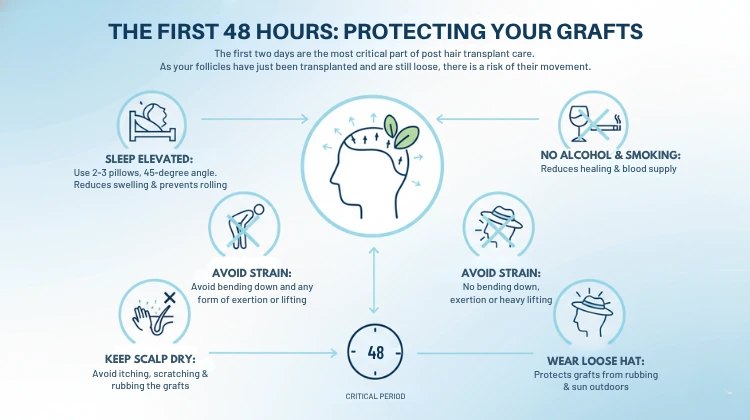
The First 48 Hours: Protecting Your Grafts
The first two days are the most critical part of post hair transplant care. As your follicles have just been transplanted and are still loose, there is a risk of their movement.
Here’s what to do:
- Sleep with your head elevated at a 45-degree angle using two or three pillows. This reduces swelling and prevents you from rolling onto the transplanted area overnight
- Keep scalp dry; try to avoid any itching, scratching or rubbing of the grafts.
- Avoid bending down and any form of exertion or lifting.
- Absolutely no alcohol and no smoking – both reduce healing rates and blood supply to follicles.
- Wear a loosely fitting hat when going out doors. The hat protects the grafts against rubbing and against sun.
Washing Your Hair After a Hair Transplant
Washing is one of the most common concerns patients raise about hair transplant aftercare. Done correctly, it keeps grafts clean and reduces infection risk.
Days 1–2: Keep the scalp completely dry. Do not wash.
Days 3–7: Cleanse your scalp gently using lukewarm water and a mild, pH-balanced shampoo which has been prescribed for you by your surgeon. The use of shower water directed onto the grafted areas is discouraged; instead, you should cup the water with your hand and pour it slowly over the grafted areas. Gently pat dry the area with a soft towel; do not scrub or rub the scalp.
After day 7: Gradually get back to a regular hair washing routine, though continue to avoid hot water and harsh scrubbing until healing of the scalp.
It is important to follow these instructions carefully as this is the period where any harsh manipulation can dislodge the scabs and therefore also the grafts before they settle. If you have any uncertainty about technique, contact the Aesthetic Aura directly rather than guessing.
Lifestyle Dos and Don’ts for Faster Recovery
The choices you make in the first few weeks matter more than most patients realise.
Do:
- Drink plenty of water and eat a protein-rich diet with zinc and vitamins A, C, D, and E
- Attend all follow-up appointments at the clinic
- Take prescribed medications on time
Don’t:
- Pick or scratch scabs let them fall off on their own
- Do heavy exercise, swim, or engage in activities that cause heavy sweating for at least two weeks
- Smoke or drink alcohol for at least one to two weeks
- Immerse your head in pools, the sea, or a hot tub until your scalp is fully healed
- Sit in the sun without a hat for at least 4 weeks when outside
Small mistakes in the first week can affect your overall results, so treat this period seriously.
Your Recovery Timeline: What to Expect Week by Week
Understanding what is normal at each stage helps reduce unnecessary worry.
Days 1–3: Grafts are at their most vulnerable. Mild swelling of the forehead is normal and expected.
Days 4–7: Swelling begins to settle. Small scabs form around the transplanted follicles. Begin gentle washing as described above.
Days 7–10: Scabs loosen and fall off naturally. By this point, the grafts are permanently fixed in place.
Weeks 2–4: Transplanted hairs may shed this is called shock loss and is completely normal. The follicles underneath are healthy and active.
Months 3–4: New hair begins to grow. It will initially appear fine and soft.
Months 6–12: Hair gradually thickens. Full density and natural appearance take 12 to 18 months to develop.
Following your hair transplant aftercare instructions through each of these stages is what leads to the best long-term outcome.
Conclusion
Post-hair transplant care is one of the most important elements. Understanding how to care after hair transplant can drastically affect your outcome. The results at 12–18 months are determined by how you care for your scalp in the days and weeks after the procedure. For further questions or a follow-up consult, contact the Aesthetic Aura Clinic team. Dr. Isha Poudel Koirala personally oversees every patient’s care from procedure through to final results.
Thinking about hair transplant in Kathmandu and need to know how to do the after care? Call the Aesthetic Aura Clinic and speak to Dr. Isha Poudel Koirala directly.
FAQs
When can I go back to work?
Most patients are back to work within 7-10 days after the first flush of swelling and crusting has resolved. If your work is physically demanding or requires a lot of lifting then please ask Dr. Isha about returning to work.
Is it normal for transplanted hair to fall out?
Yes, completely normal. Most transplanted hair sheds within two to four weeks of surgery. This is called shock loss and does not mean the procedure has failed. New growth begins around three to four months after the procedure.
How should I sleep after the surgery?
Keep your head elevated at a 45-degree angle using two to three pillows. Avoid sleeping on your side or stomach for at least seven to ten days to protect the grafts.
When can I start exercising again?
Avoid heavy exercise or any activity that causes significant sweating for at least two weeks. Light walking is generally fine after a few days. Always confirm with your surgeon before resuming any specific activity.
When will I see the final results?
Initial new growth appears around three to four months. Full density and a natural appearance take 12 to 18 months to develop fully.
Disclaimer: The above mentioned hair transplant aftercare is general information. Each patient's recovery time may be different, thus you must adhere to the surgeon's recommendations given at the Aesthetic Aura Clinic.
